KATEGORI
Perimeter Threat Early‑Warning Gets Upgraded, Heavy‑Duty Erect Anti‑Reconnaissance Unit Delivers Uninterrupted Field Situational Awareness
Remote outposts and extensive critical infrastructure are vulnerable to long‑range optical surveillance, with manual monitoring hampered by operator fatigue and limited visual range. The newly deployed erect heavy‑duty anti‑reconnaissance gimbal, featuring modular optoelectronic sensing and autonomous patrol functions, provides round‑the‑clock threat detection over wide open‑field areas and fills early‑warning gaps for remote security sites.
Sep 1st,2026
3 Pandangan
Multiple frontier security zones have finished field deployment of the erect heavy‑duty anti‑reconnaissance unit to strengthen outer‑perimeter risk prevention. Optimized for long‑term outdoor stand‑alone operation, the sand‑colored equipment adopts rugged modular housing reaching IP67 ingress protection grade. It can reliably operate amid desert sandstorms, coastal salt mist, heavy snowfall and blazing high‑temperature sunshine, adapting to diverse complicated field climates across different geographic regions.
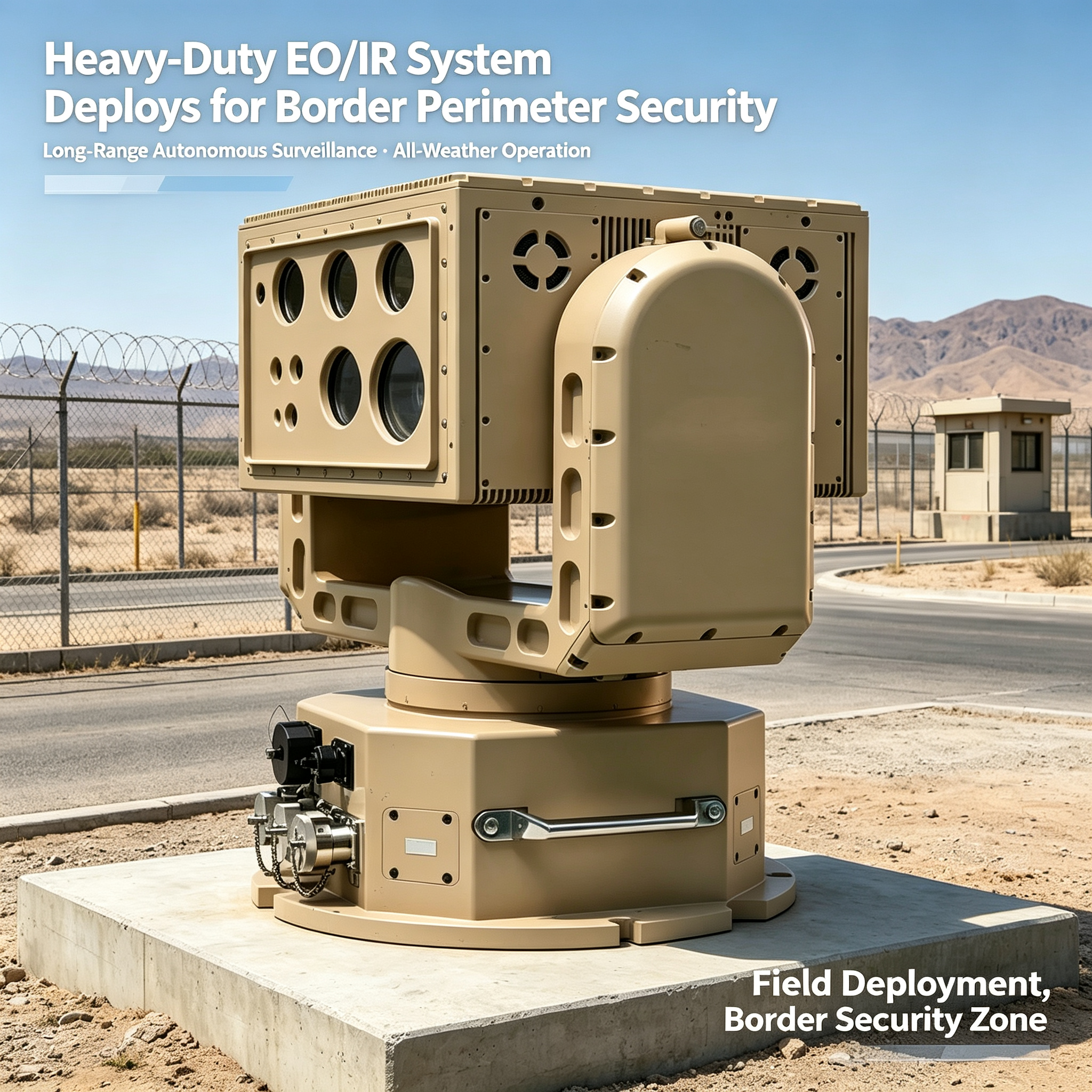
Its high‑load servo gimbal supports flexible horizontal and vertical rotation, removing fixed viewing‑angle restrictions. Multi‑sensor hardware integrates visible‑light imaging, thermal infrared detection and laser ranging modules, building multi‑dimensional perception capability. Under daylight conditions, high‑definition optical sensors capture subtle lens reflection features from distant reconnaissance gear. When night falls, thermal infrared channels pick up heat signatures without being restrained by darkness or shadow interference. Laser ranging components calculate exact distance and azimuth data for every suspected target. Mounted firmly on steel poles or concrete monitoring piers, the hardware runs pre‑programmed autonomous patrol cycles without on‑site attendants. Once optical reconnaissance equipment such as observation scopes and long‑distance surveillance cameras is captured, the system will swiftly lock the target position, store original snapshot and video evidence, and transmit threat parameters including azimuth and geographic coordinates toward remote command terminals with low‑latency alert feedback.
Multiple units can establish interlinked detection networks to realize seamless coverage for lengthy security boundaries, greatly lowering physical patrol pressure for front‑line staff. Long‑term field reliability tests prove the device can sustain stable performance under continuous working conditions. It provides solid technical support for proactive threat identification for border sections, energy bases and key facility peripherals.